DIY Resin 3D Printer Ventilation Systems: 3 Ways to Ensure Safety
Resin 3D printing releases volatile organic compounds (VOCs) at every stage of operation: during printing, when you open the lid, during washing, and during curing. Ventilation is required. This post covers three DIY approaches to building a resin printer ventilation system, and where each one has limits.
Option 1: Enclosure extraction system
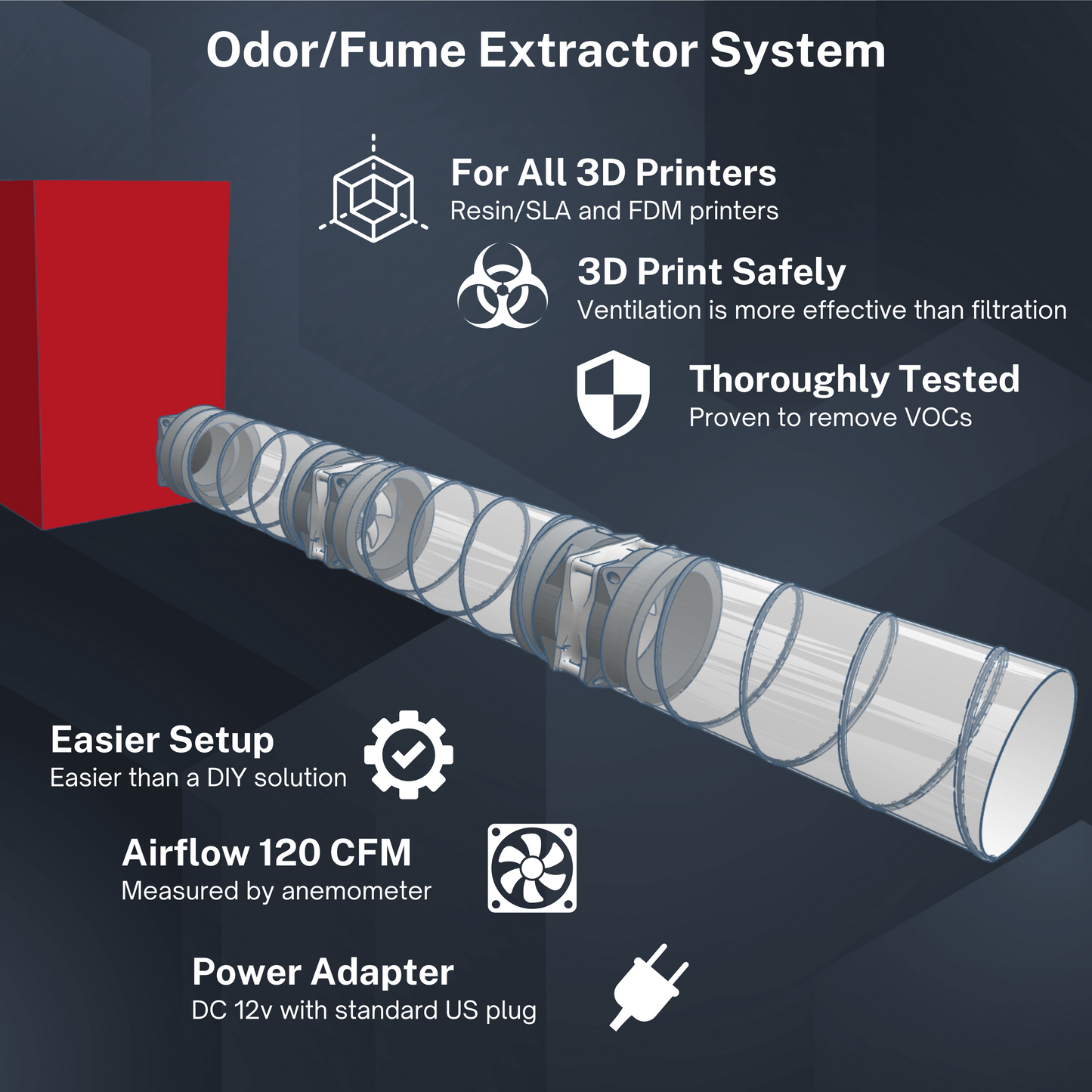
This approach focuses on removing fumes directly from a printer enclosure. You'll need an enclosure sized for your printer, an exhaust fan, flexible ducting, and an exterior exhaust outlet (such as a dryer vent or window kit).
Connect one end of the flexible ducting to the exhaust fan mounted on or inside the enclosure. Route the other end outside — through a window, wall vent, or similar exterior outlet. The fan pulls fume-laden air out of the enclosure and exhausts it outdoors. This is the most effective DIY approach because it captures fumes before they disperse into the room.
For this to work correctly, fresh air must be able to enter the enclosure. A sealed system with only an exhaust will create negative pressure and reduce airflow. Leave a small gap or intake for fresh air replacement.
Option 2: Window exhaust fan
A box fan or window fan positioned to exhaust room air outdoors provides general ventilation for the printing space. This is less effective than enclosure extraction because fumes disperse into the room before being removed, but it is better than no ventilation.
For this approach to work: the printer should be positioned as close to the exhaust fan as practical, the room door should be open to allow fresh air in, and you should not be in the room while printing.
Option 3: Carbon filter + exhaust
An activated carbon filter positioned at the printer's exhaust can reduce VOC concentrations before the air is vented. This is a secondary measure, not a replacement for direct exhaust ventilation. Carbon filters absorb VOCs but have a limited lifespan — once saturated, they stop working without any obvious indication. They also do nothing for ultrafine particles.
A ready-made alternative
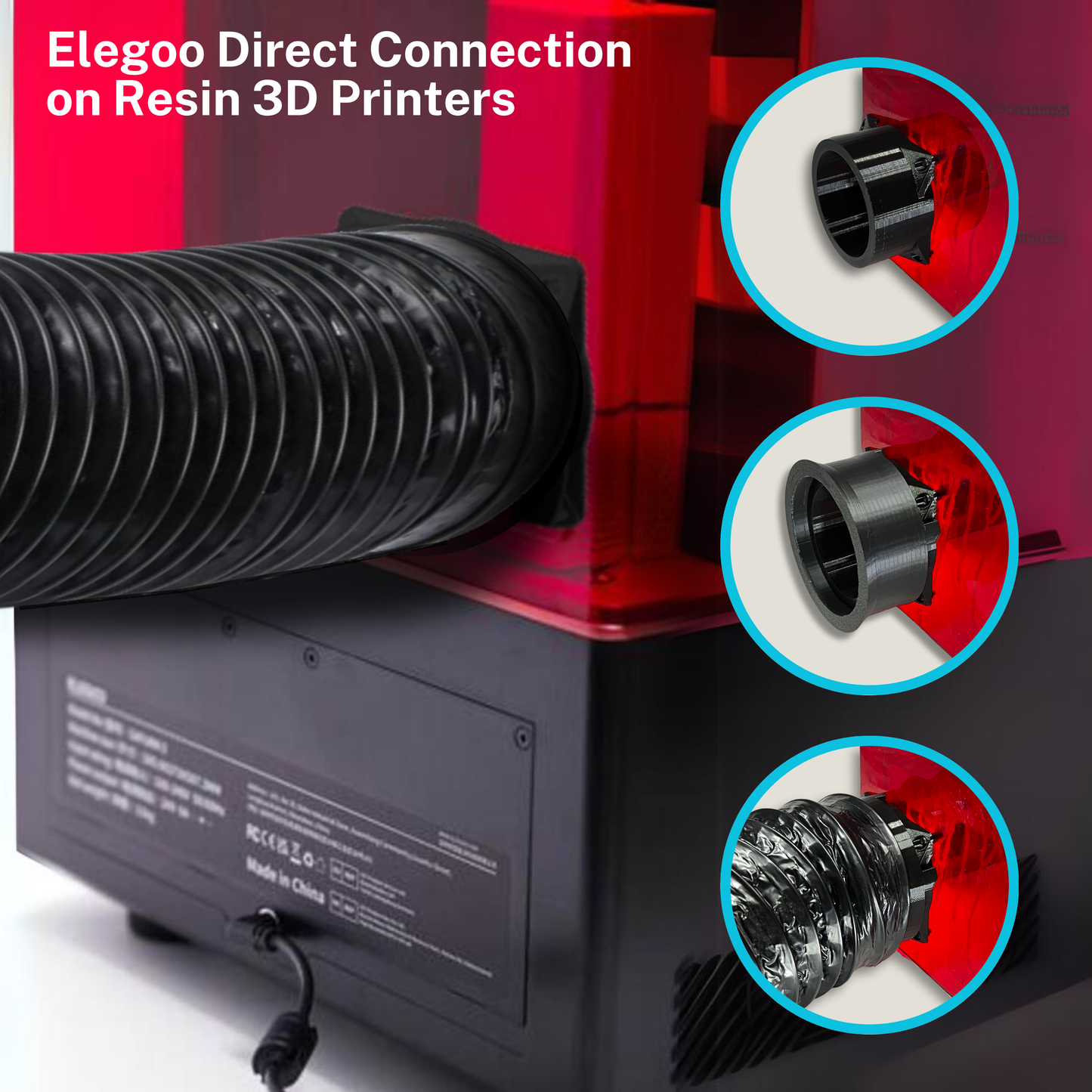
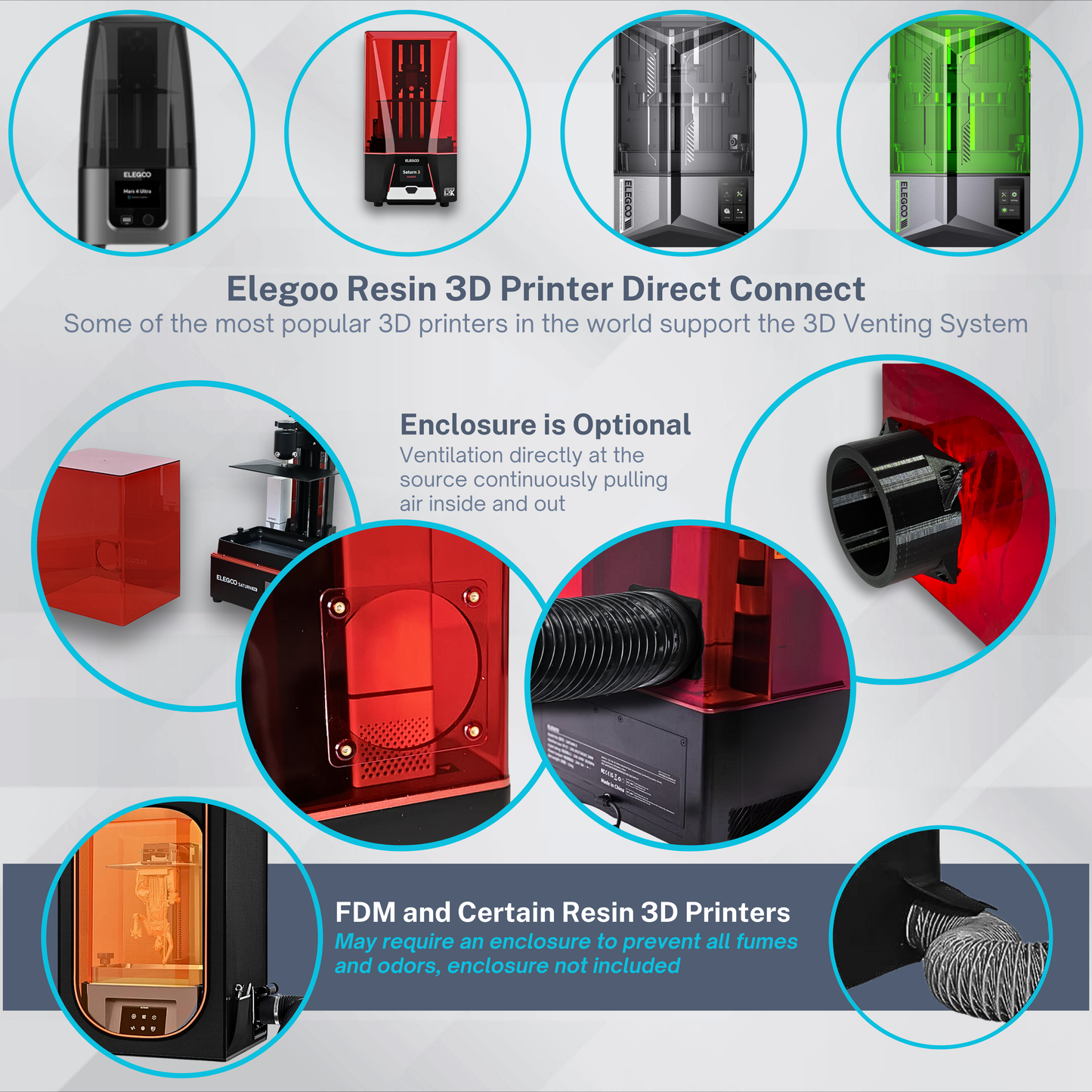
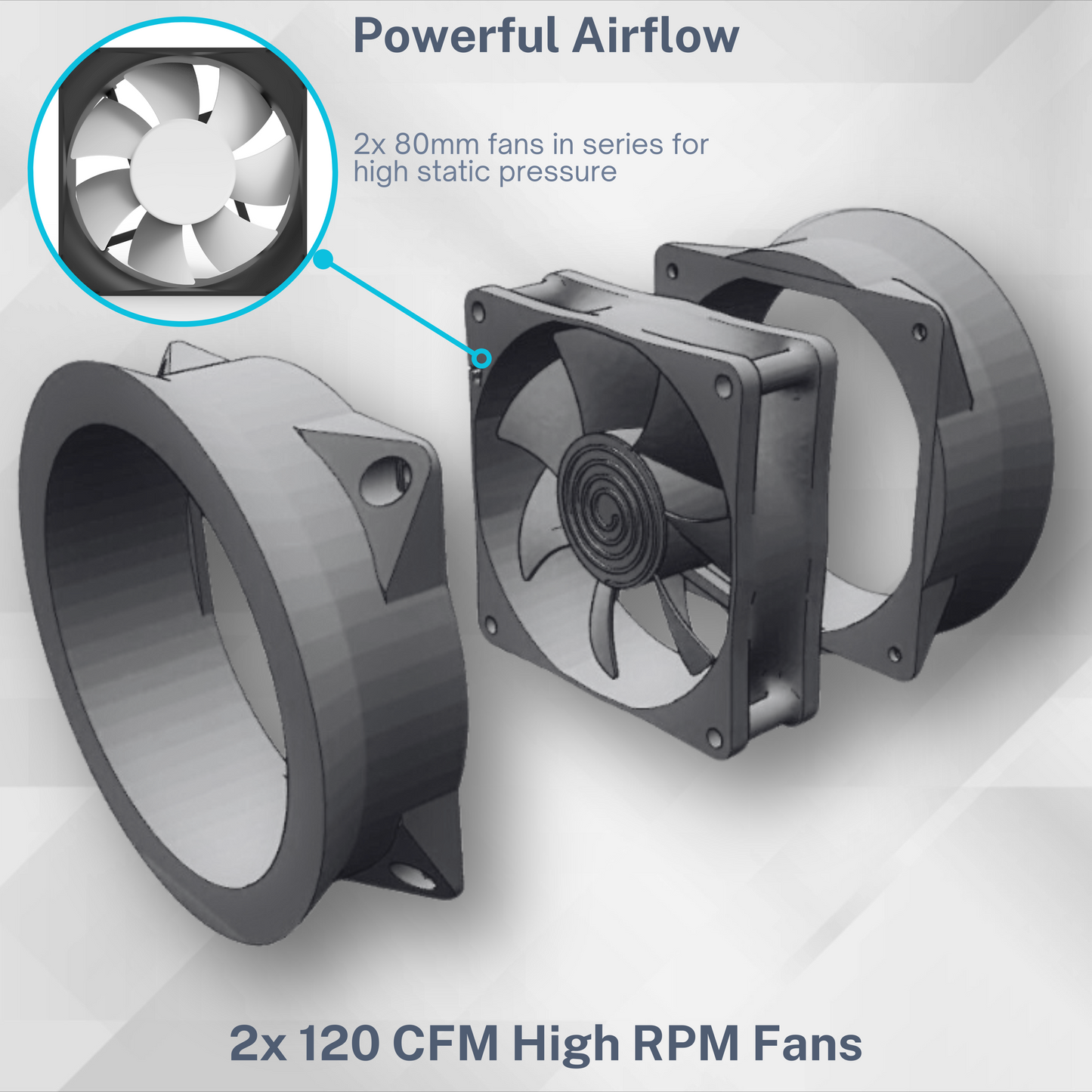
If you own an ELEGOO resin printer, 3D Venting builds ventilation systems specifically designed to connect to your printer's built-in exhaust port. No enclosure required for compatible models. The system connects to a window vent or exterior outlet and exhausts fumes directly outdoors. See available systems.
Whichever approach you use: ventilate fumes outdoors, wear gloves and a respirator when handling wet prints, and do not occupy the printing space during operation.