University of Pennsylvania: 3D Printing Safety
The Office of Environmental Health and Radiation Safety (EHRS) at the University of Pennsylvania publishes a 3D Printing Fact Sheet and Guide for users operating printers in lab and academic settings. The guide identifies key hazards and required controls for safe use.
What the UPenn guide covers
The UPenn EHRS guide addresses the primary risks associated with 3D printing: VOC emissions from resin and filament materials, ultrafine particle generation, and skin and respiratory sensitization. It covers hazard identification, engineering controls, safe work practices, required protective equipment, and waste disposal procedures.
Key takeaways on ventilation
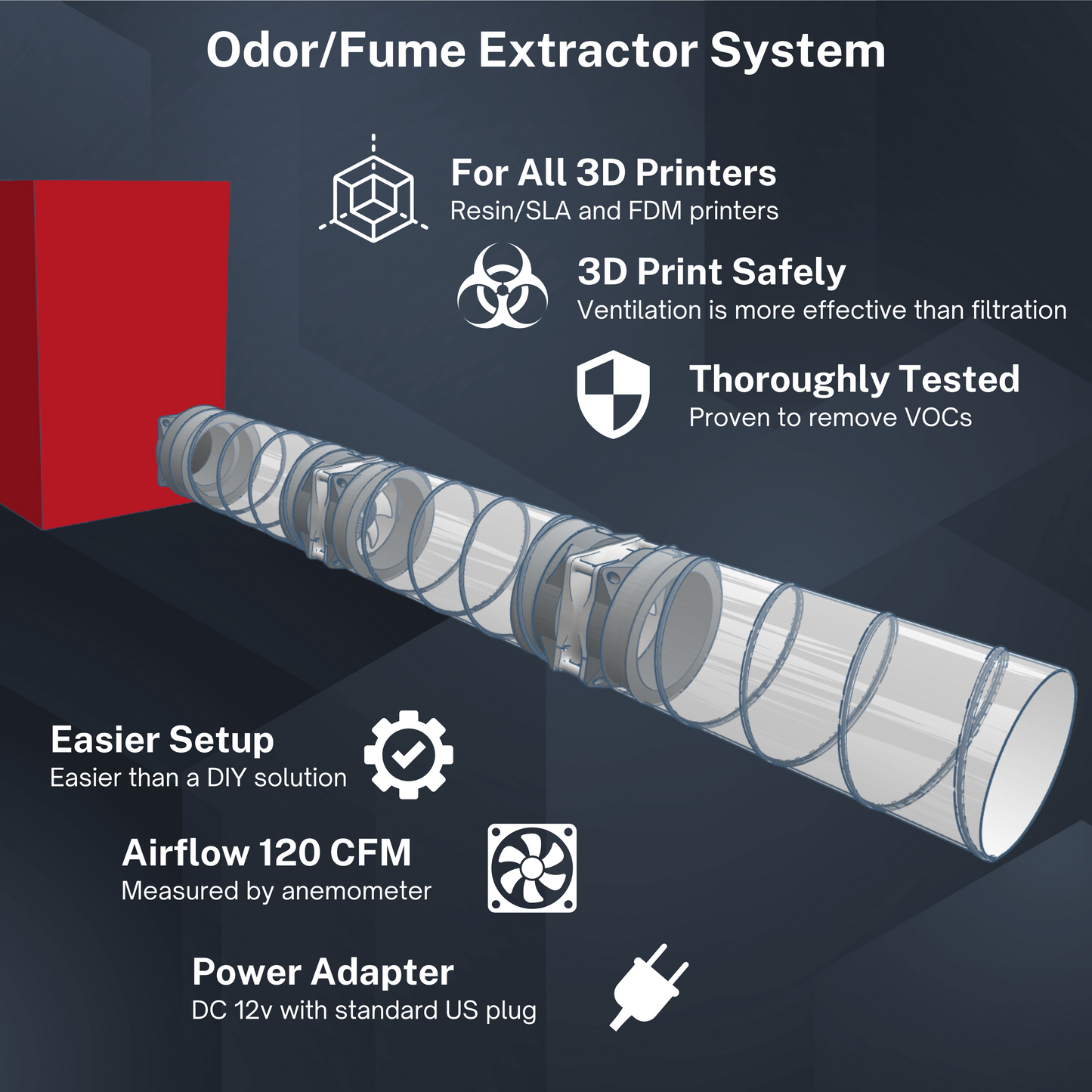
The guide emphasizes that ventilation is a required engineering control, not an optional comfort measure. Fume hoods and local exhaust ventilation systems that direct contaminated air away from the breathing zone and outside the workspace are identified as the appropriate controls. Air purifiers that recirculate room air are not listed as equivalent substitutes for direct exhaust ventilation.
Protective equipment requirements
When handling resin — including pouring, washing, and curing — the guide requires gloves and respiratory protection. These are not suggestions. Chemical-resistant gloves and a respirator with organic vapor cartridges are required for all direct resin contact.
Resin printing specifically
Resin 3D printers (SLA/MSLA) are identified as releasing higher concentrations of VOCs than FDM filament printers. The guide notes that sensitization to acrylate compounds — the core chemistry of photopolymer resins — is a permanent condition. Once sensitized, repeated exposure at any level can trigger significant reactions.
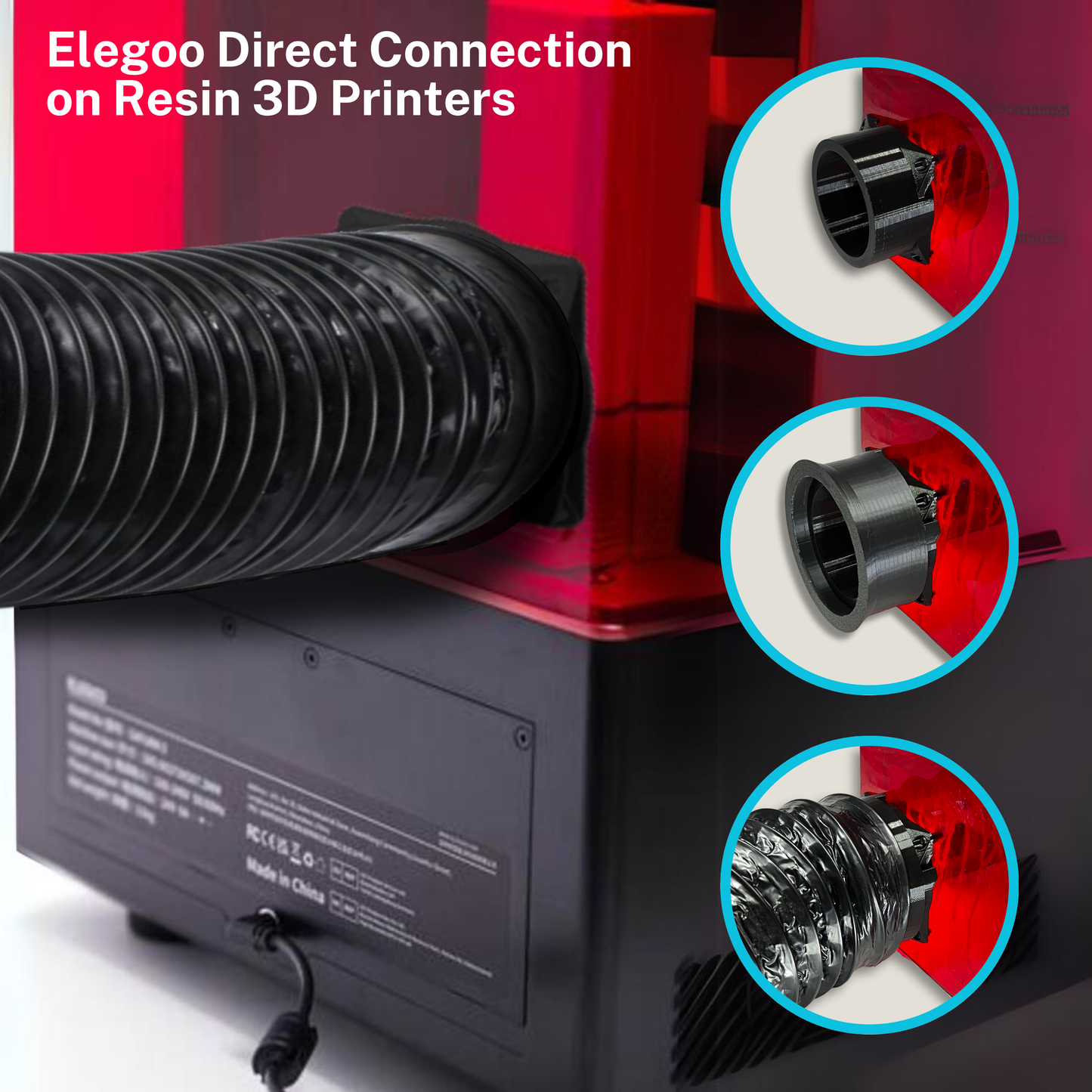
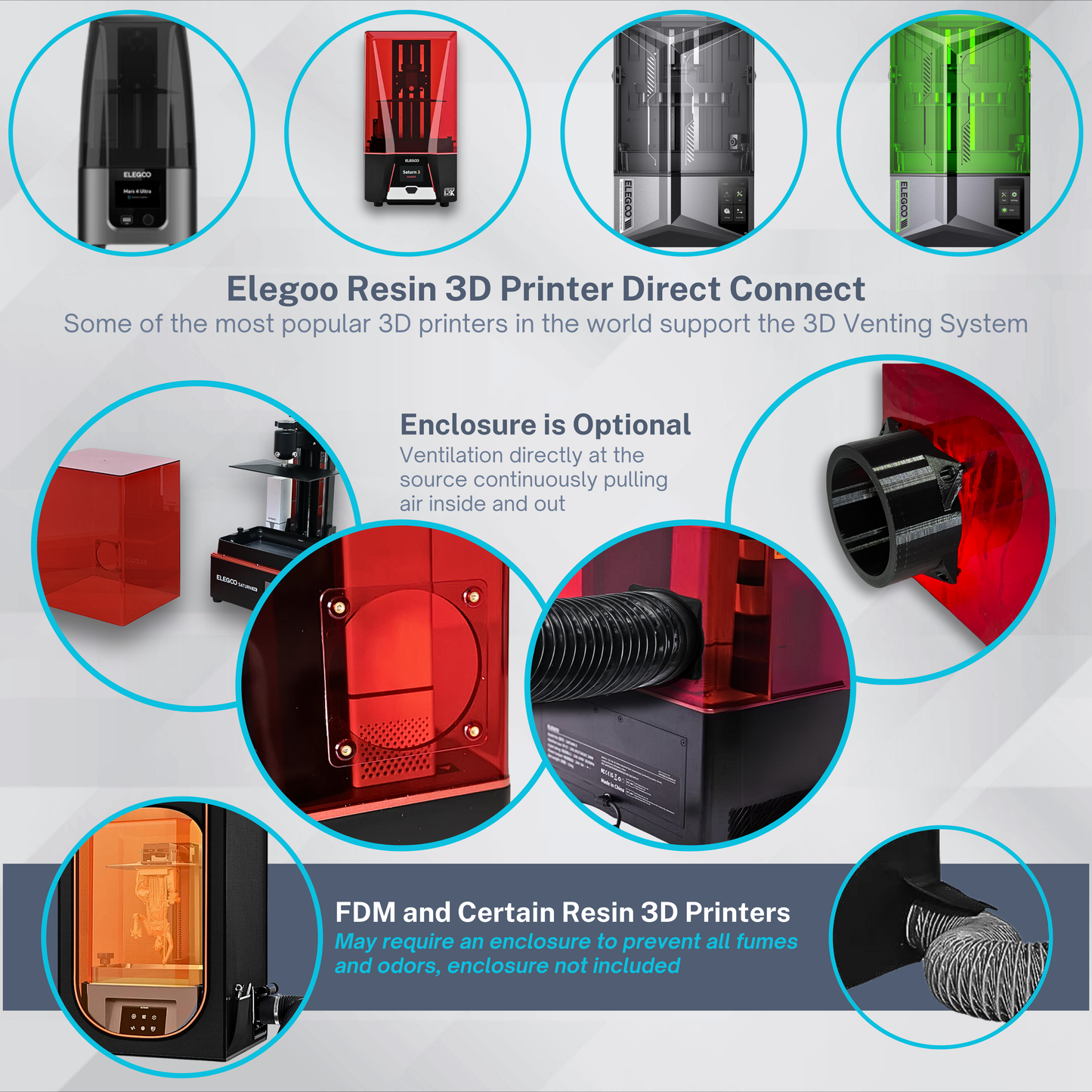
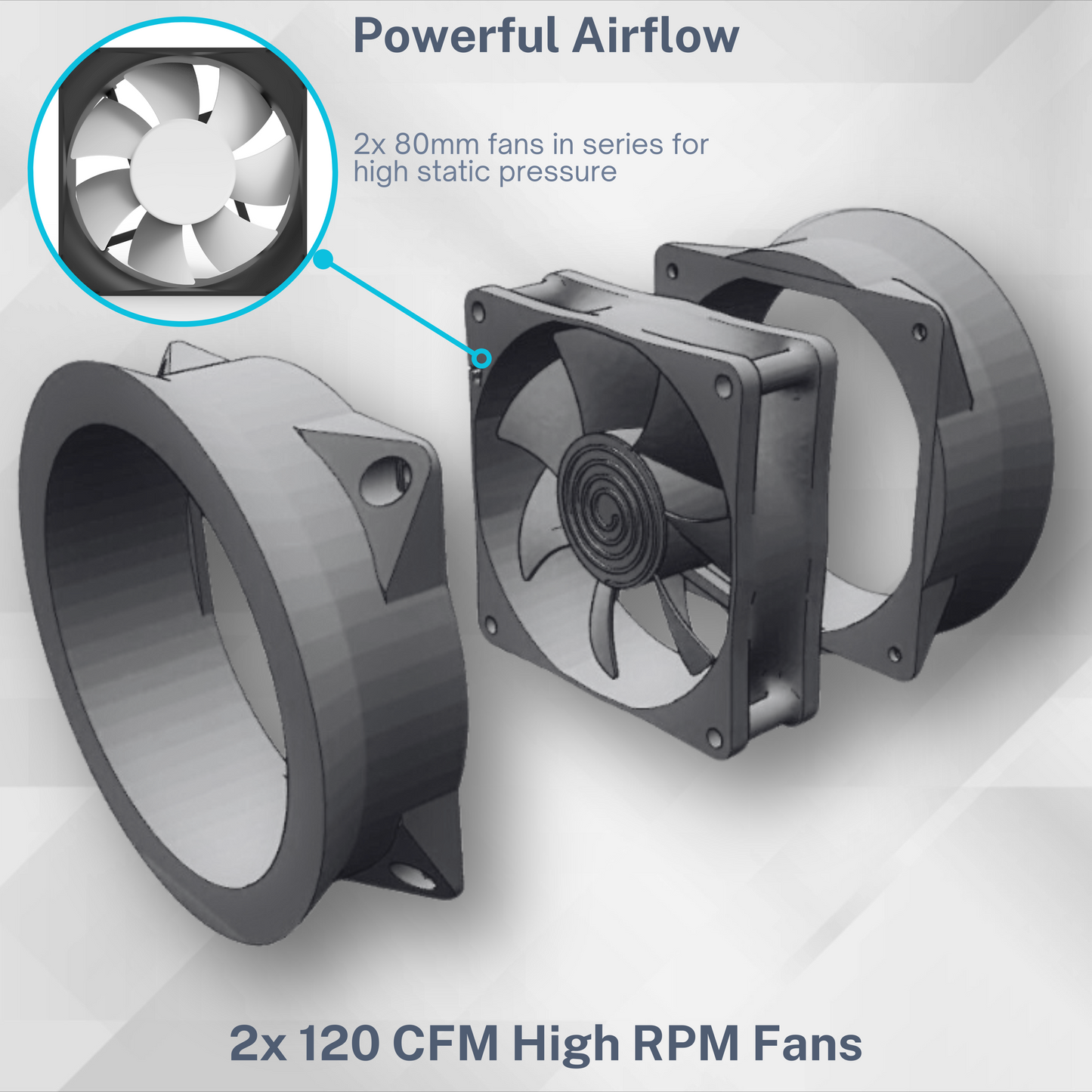
For ELEGOO resin printer owners looking to implement proper exhaust ventilation: 3D Venting systems connect directly to your printer's exhaust port and vent fumes outdoors.