Does the ELEGOO Saturn Filter Actually Work? What the Research Shows
If you own an ELEGOO Saturn and you've been relying on the built-in carbon filter to handle your resin fumes, you're not alone — and you're not getting the protection you think you are.
The short answer is no: the built-in filter doesn't work the way most people assume. Here's what it actually does, why that matters, and what a real solution looks like.
What the Built-In Filter Actually Does
The carbon filter inside your ELEGOO Saturn — and most other consumer resin printers — is designed to reduce odor, not eliminate fume exposure. It pulls air from inside the printer, passes it through activated carbon to capture some of the smell, and then releases that air back into the room.
That last part is the problem. The air being released is still loaded with volatile organic compounds (VOCs). Carbon filters capture some compounds reasonably well, but they saturate over time, they don't capture everything, and — most importantly — they return the air to your breathing space rather than removing it from the room entirely.
This is the difference between filtration and ventilation. Filtration cleans air and keeps it in the same space. Ventilation removes contaminated air and replaces it with fresh air from outside. For resin printing, only ventilation actually addresses the problem.
What the Research Shows
Independent testing by 3D Venting measured TVOC levels in a closed 20×25 foot room after starting a resin print. Within a short time, levels reached 1.887 mg/m³. The World Health Organization classifies readings above 0.3 mg/m³ as potentially causing discomfort and above 3.0 mg/m³ as hazardous. A reading of 1.887 mg/m³ falls in a zone associated with discomfort and early health effects — and that's with a printer running its standard carbon filter.
Research published in ACS Chemical Health & Safety identified 30 to over 100 individual VOCs emitted during resin printing (Zhang et al., 2022). These include esters, alcohols, aldehydes, ketones, and hydrocarbons — many of which are known sensitizers, irritants, or carcinogens. Total VOC emission rates from resin printing exceeded 4 mg/h, significantly higher than comparable FDM printing.
The built-in filter on your Saturn is doing something. It's just not doing enough.
The Carbon Filter Saturation Problem
Even at its best, a carbon filter has a finite capacity. The activated carbon begins saturating from its first use. As it saturates, its ability to capture VOCs degrades — but there's no indicator telling you when it's no longer effective. Most users replace the filter infrequently if at all.
A filter that's weeks old and has run through dozens of prints is providing very little protection. And even a fresh filter is still recirculating air rather than removing it from the room.
What Actually Works
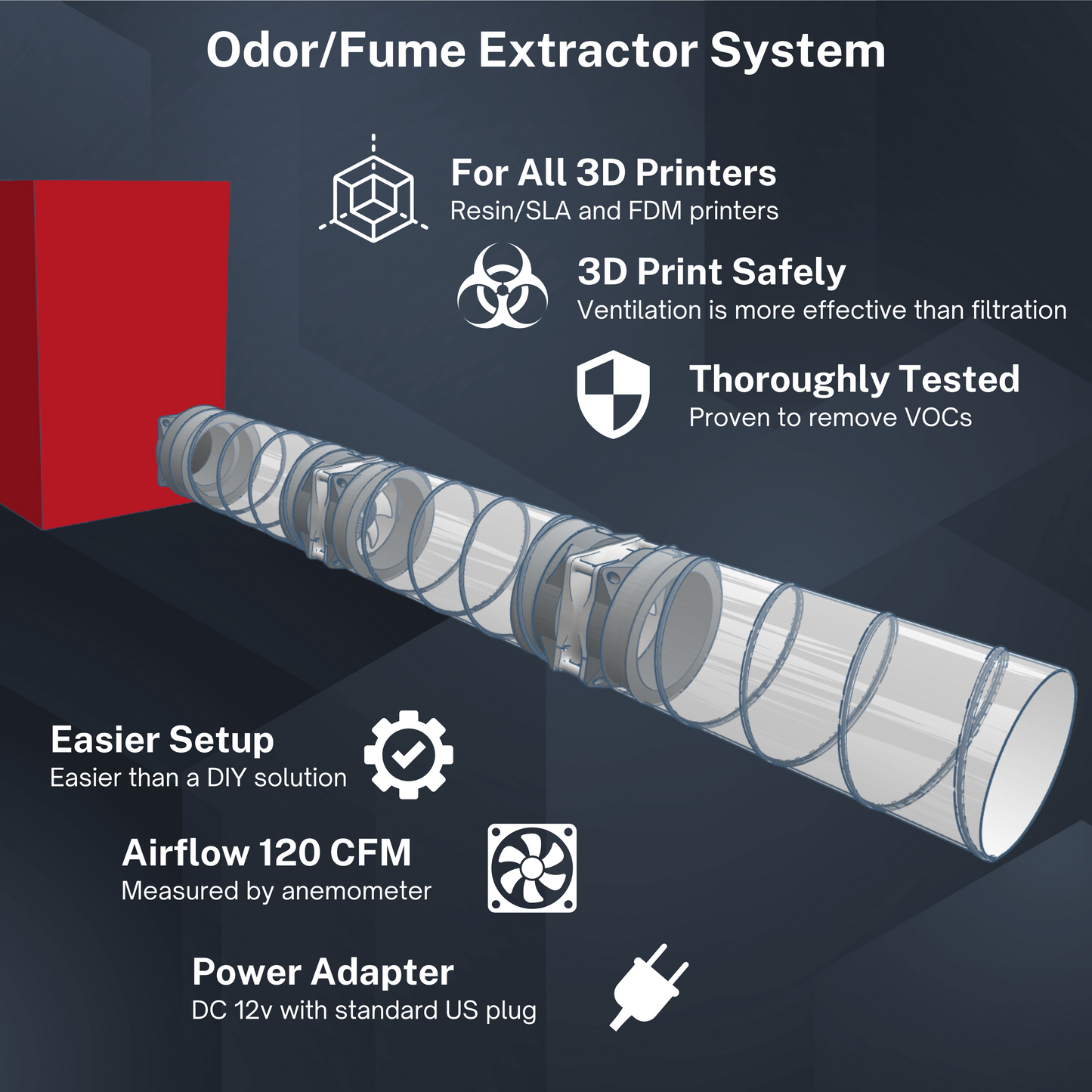
The only method that reliably addresses resin VOC exposure is direct exhaust ventilation: pulling contaminated air from the printer and venting it outside. NIOSH places direct exhaust ventilation at the top of its hierarchy of protective controls for vat photopolymerization printing (NIOSH, 2024).
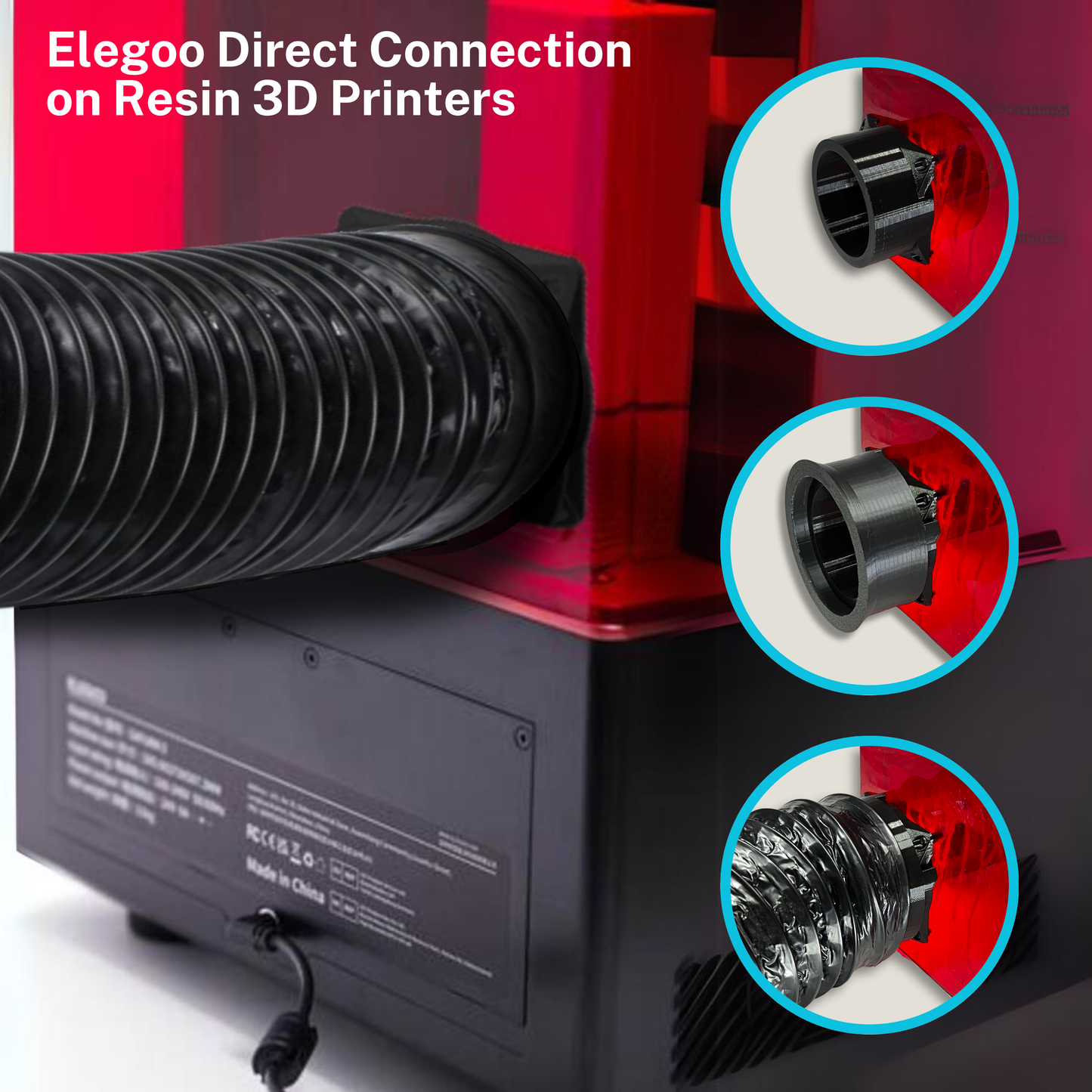
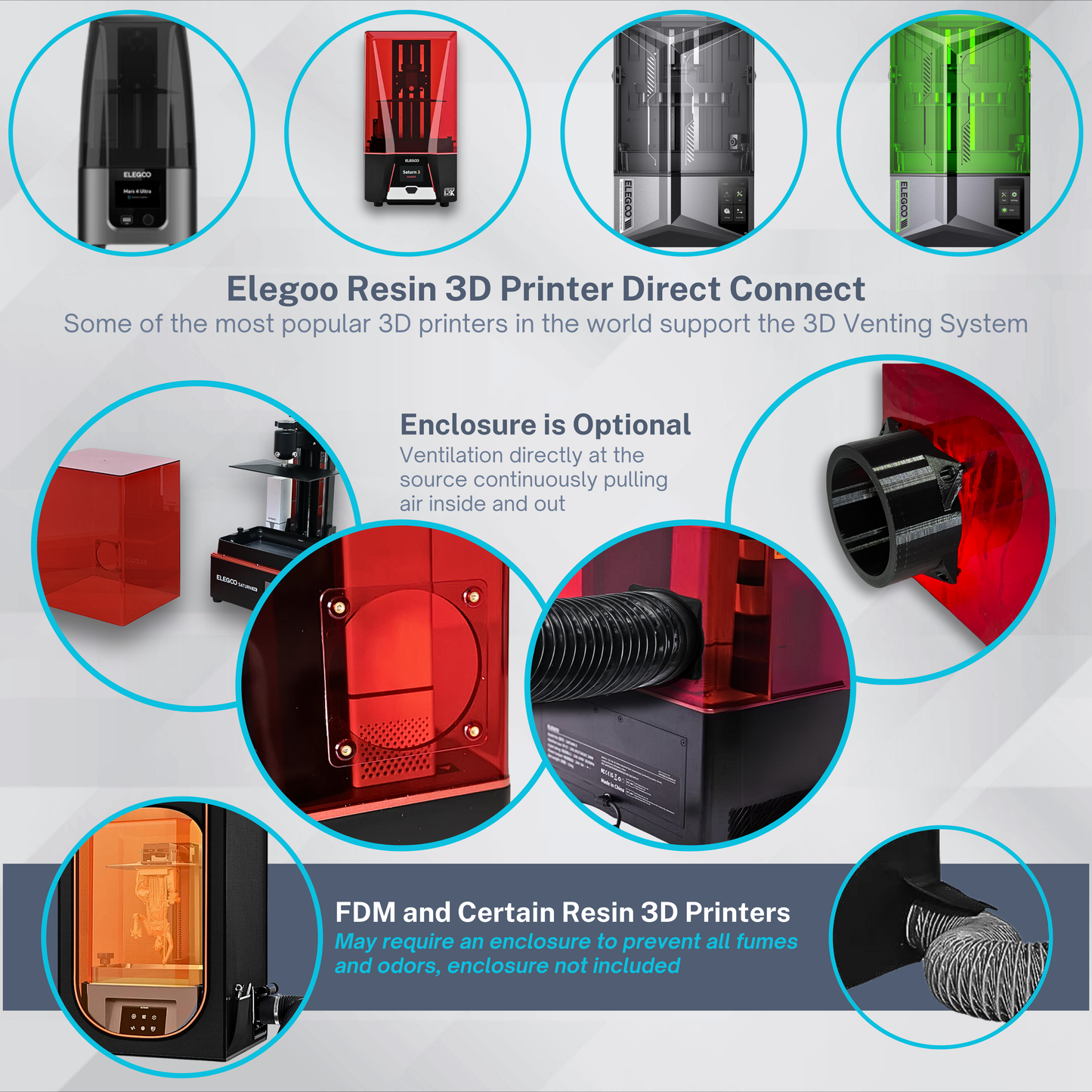
The ELEGOO Saturn series (Saturn 2, Saturn 3, Saturn 4, Saturn 4 Ultra, Saturn 4 Ultra 16K, and Saturn 8K) all have a dedicated exhaust port on the back. This is the same port the carbon filter connects to. Replacing that connection with an inline fan and flexible duct hose routed to a window exhausts fumes outside at the source.
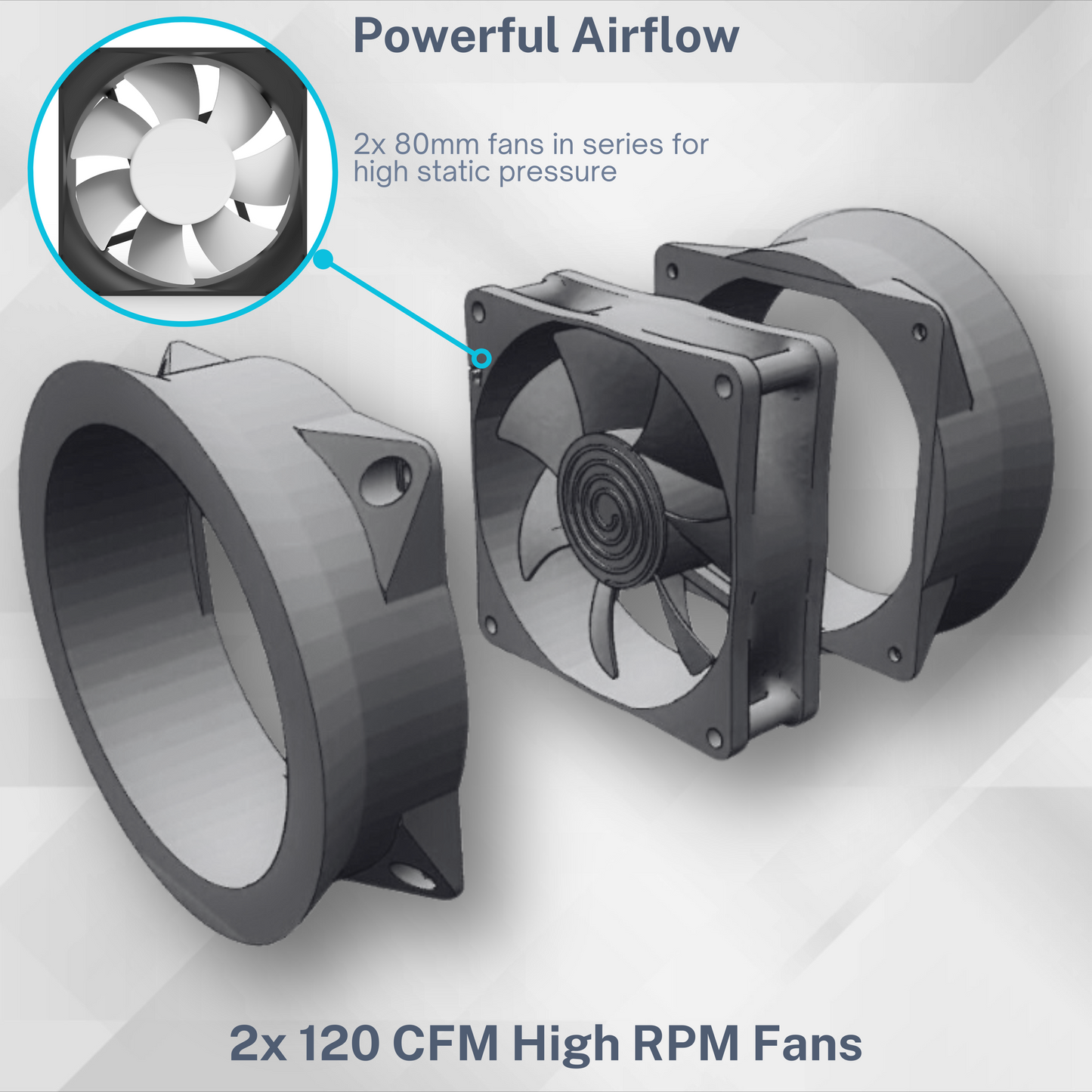
This is the concept behind the 3D Venting VENT80 and VENT120 systems. Both connect directly to the Saturn's exhaust port — no enclosure required — and move air at 120 CFM and 250 CFM respectively through a duct routed to a window vent.
The Bottom Line
The built-in ELEGOO Saturn filter is not a substitute for ventilation. It reduces odor. It does not remove VOC exposure from your workspace. If you're relying on it in an enclosed space, you're being exposed to higher VOC levels than you realize.
For the full research — exposure stages, concentration data, health risks — see the 3D Venting research page, which compiles citations from NIOSH, ACS, WHO, and other sources.