Resin 3D Printing Fumes: What the Research Actually Says
If you've looked into resin printing safety, you've probably encountered two extremes: people who print with no precautions in a closed room, and people who treat it like a biohazard lab. Neither is calibrated to what the research actually shows.
Here's a straightforward summary of what independent testing and peer-reviewed research says about resin printing fumes — what's in them, when exposure peaks, what the health effects are, and what actually works.
What's in the Fumes
Photopolymer resin contains acrylate monomers and oligomers, photoinitiators, and various additives. When a printer runs, these compounds off-gas as volatile organic compounds (VOCs) throughout the entire workflow — not just during the print.
Research published in ACS Chemical Health & Safety (Zhang et al., 2022) identified 30 to over 100 individual VOC species from resin printing, including esters, ketones, aldehydes, alcohols, and hydrocarbons. Many are known sensitizers, irritants, or carcinogens. Total VOC emission rates exceeded 4 mg/h — significantly higher than rates measured from FDM printers.
A subsequent study found VOC emission rates from resin printers to be up to 26 times higher than those from FDM printers. The compounds aren't just smells — they're chemically active substances that interact with respiratory tissue.
The Five Stages of Exposure
Exposure doesn't only happen when the printer is running. NIOSH has identified five distinct stages where VOC release occurs:
- During the print — the light source cures successive layers. The enclosed printer body limits some escape, but not completely.
- When you open the lid — the accumulated atmosphere inside the printer is released all at once. This is one of the higher-exposure moments.
- During IPA washing — this is the peak exposure stage. Isopropyl alcohol washing dissolves uncured resin and aerosolizes it. NIOSH testing measured TVOC concentrations during this stage at up to 36.8 mg/m³ — well into the range classified as hazardous.
- During UV curing — finished prints in a UV station produce additional off-gassing from remaining uncured material.
- From finished prints (ongoing) — cured resin parts continue to off-gas for an extended period. Research has found detectable VOC emissions for up to 84 days post-cure.
What Concentrations Mean
Independent VOC testing by 3D Venting measured TVOC levels in a closed 20×25 foot room after starting a resin print. Levels reached 1.887 mg/m³ with a standard carbon filter running.
The WHO's TVOC classification:
- Below 0.3 mg/m³: comfortable
- 0.3–3.0 mg/m³: possible discomfort, some health effects
- Above 3.0 mg/m³: hazardous to health
A reading of 1.887 mg/m³ falls in the middle zone — associated with headaches, irritation, fatigue, and early respiratory effects.
The Sensitization Risk
The most serious long-term health risk from resin printing isn't acute toxicity — it's acrylate sensitization. Acrylates are the core chemical family in photopolymer resins, and they are potent sensitizers.
With repeated exposure, your immune system can develop a lasting sensitivity to acrylates. Once sensitization occurs, future exposures — even at low concentrations — can trigger immune responses ranging from dermatitis to respiratory distress. Sensitization is permanent. There is no treatment that reverses it.
NIOSH explicitly identifies acrylate sensitization as a health risk for vat photopolymerization printing in non-industrial settings (NIOSH, 2024).
What the Research Recommends
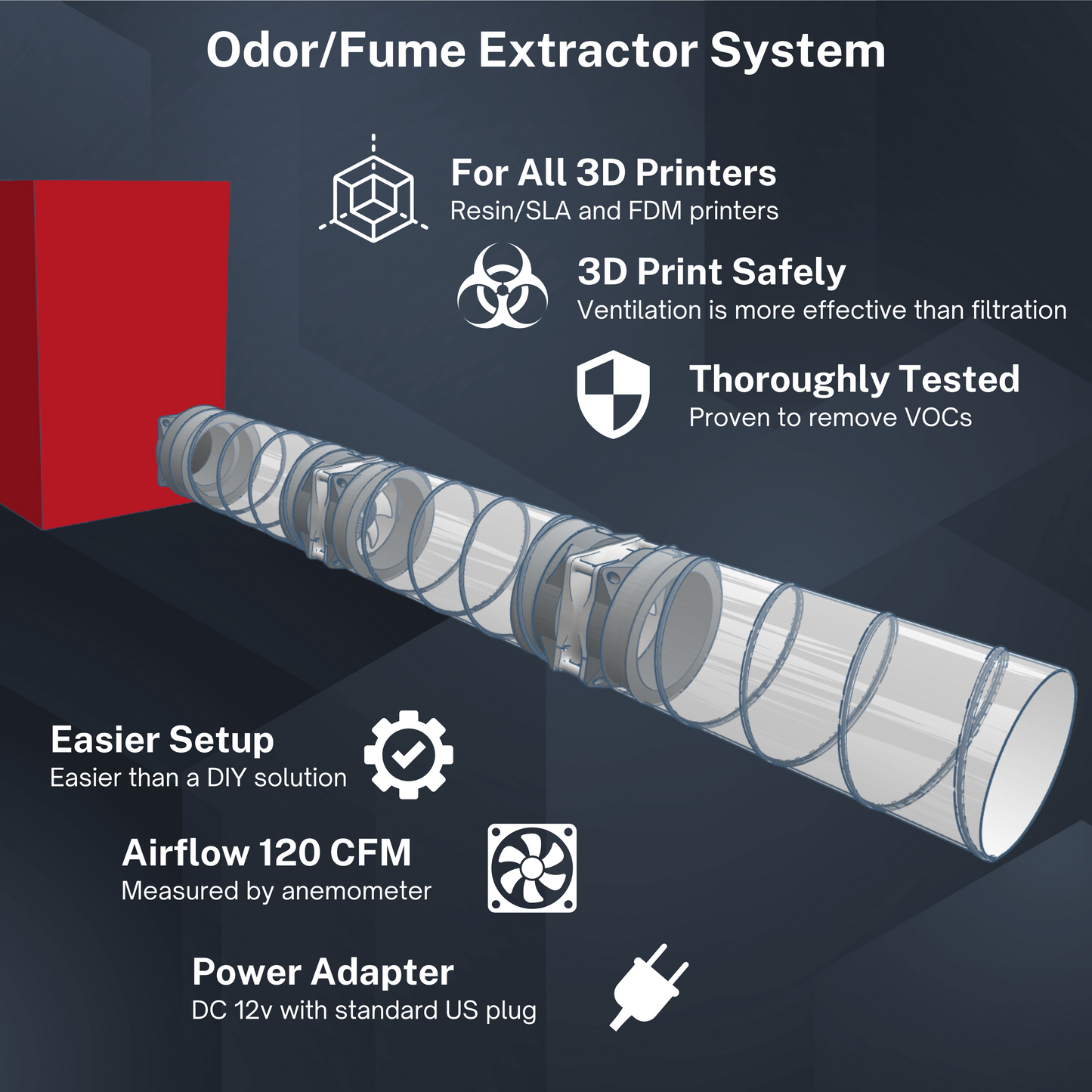
NIOSH's hierarchy of controls for resin printing places direct exhaust ventilation at the top — above respirators, enclosures, and carbon filters. Engineering controls address the source and protect everyone in the space continuously.
The specific recommendations from NIOSH (2024):
- Direct exhaust ventilation that removes contaminated air to the outside
- Fresh air makeup — leave a window cracked when exhausting air
- No room occupancy during printing
- At least 24 hours before re-entry after printing ends
- Appropriate respirator and gloves during all washing and curing steps
What Doesn't Work (and Why)
Built-in carbon filters: Most consumer resin printers include a small activated carbon filter. Carbon filters reduce odor by adsorbing some VOC compounds. They do not eliminate VOC exposure because they recirculate filtered air back into the room rather than exhausting it outside. The filter also saturates over time, degrading in effectiveness without any visible indicator.
Enclosures without exhaust: An enclosure that seals the printer but has no exhaust just concentrates the fumes. When you open it, the accumulated atmosphere releases all at once.
Relying on smell as a warning: VOCs are detectable by smell at concentrations far below hazardous levels, but smell is inconsistent. Acrylate sensitization can occur before you notice any odor.
The Practical Takeaway
Resin printing is manageable. The risks aren't a reason to stop; they're a reason to set up your workflow correctly.
The essentials: don't print in a closed, unventilated space; exhaust the fumes outside (not recirculated); leave a window cracked for fresh air; don't occupy the room during printing; don't skip the 24-hour wait.
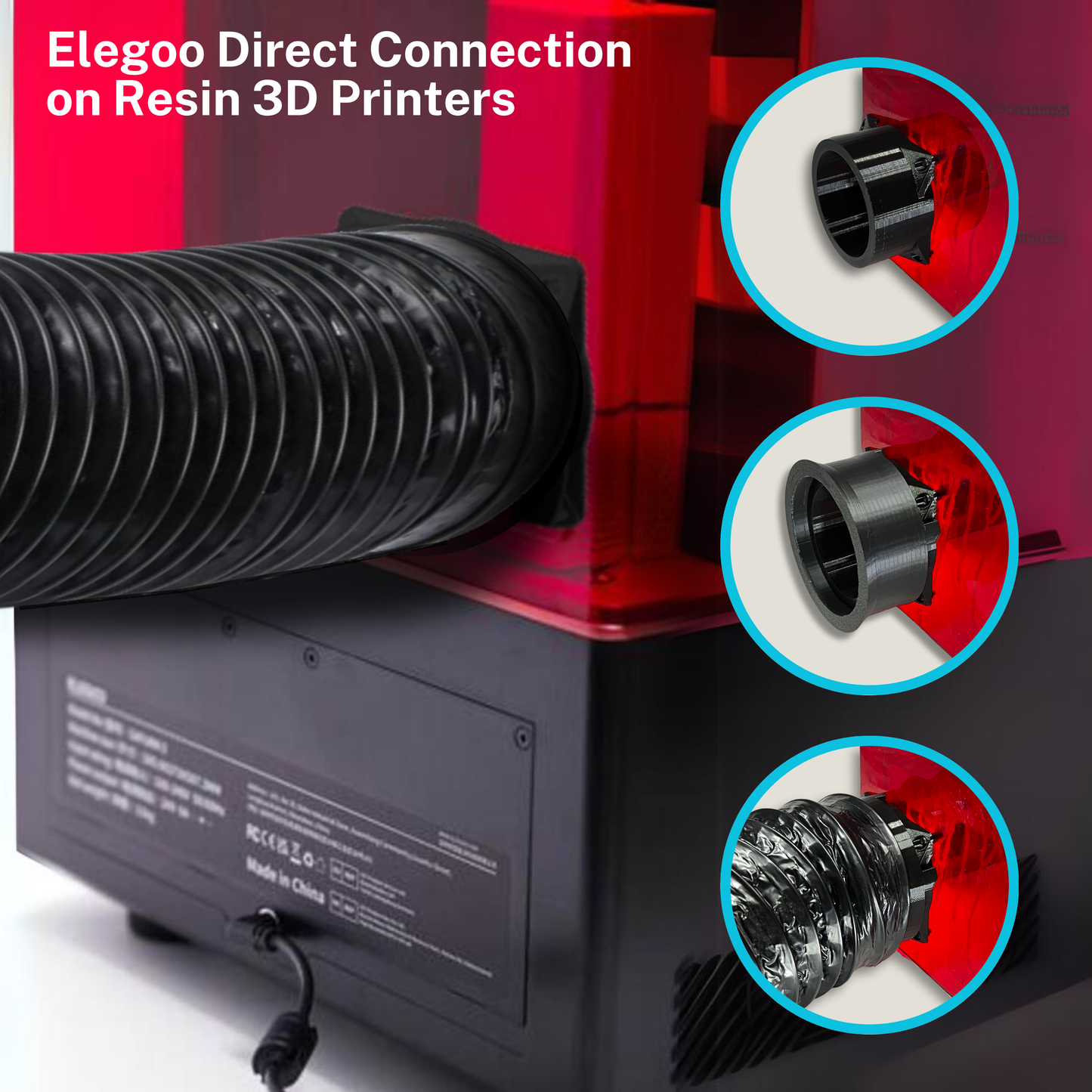
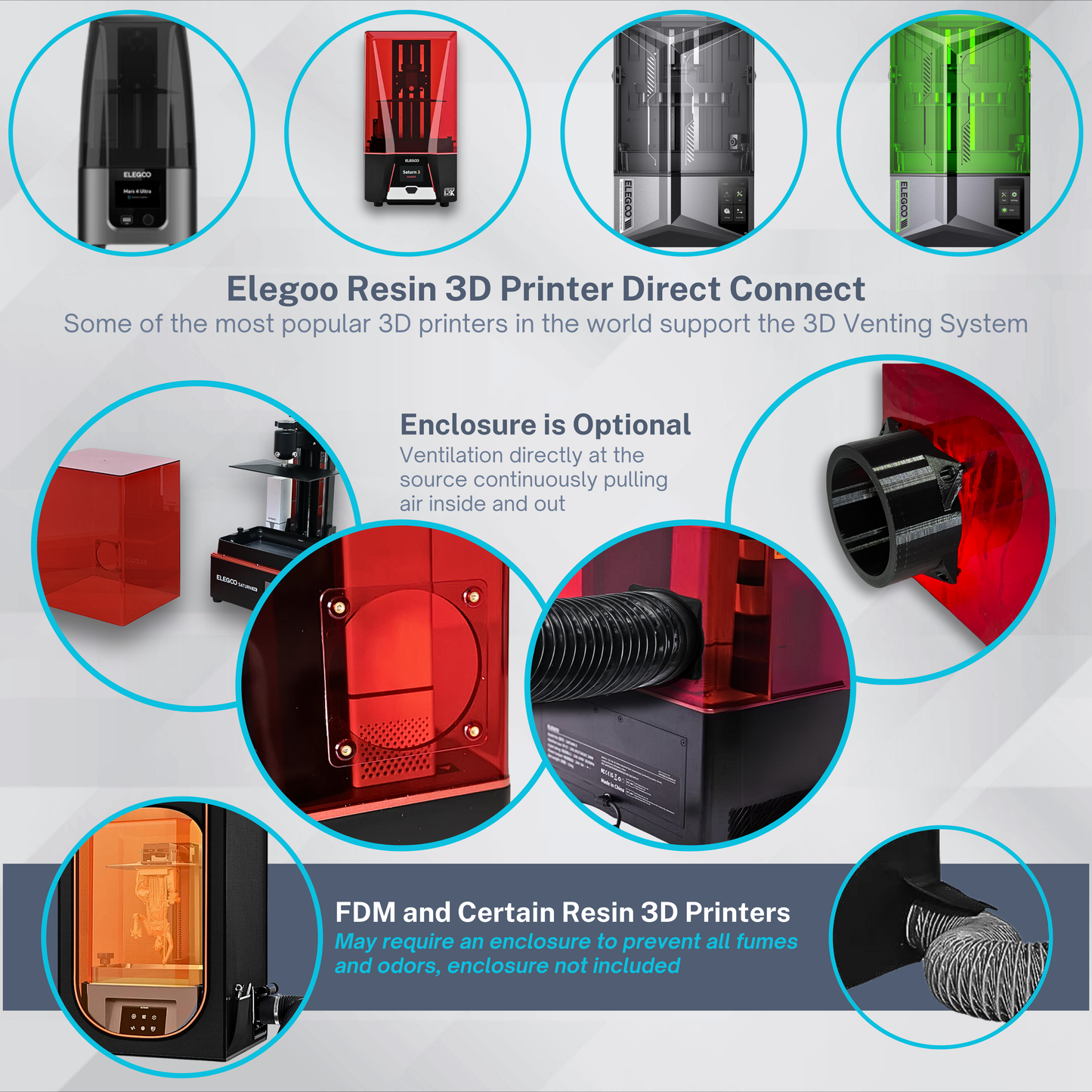
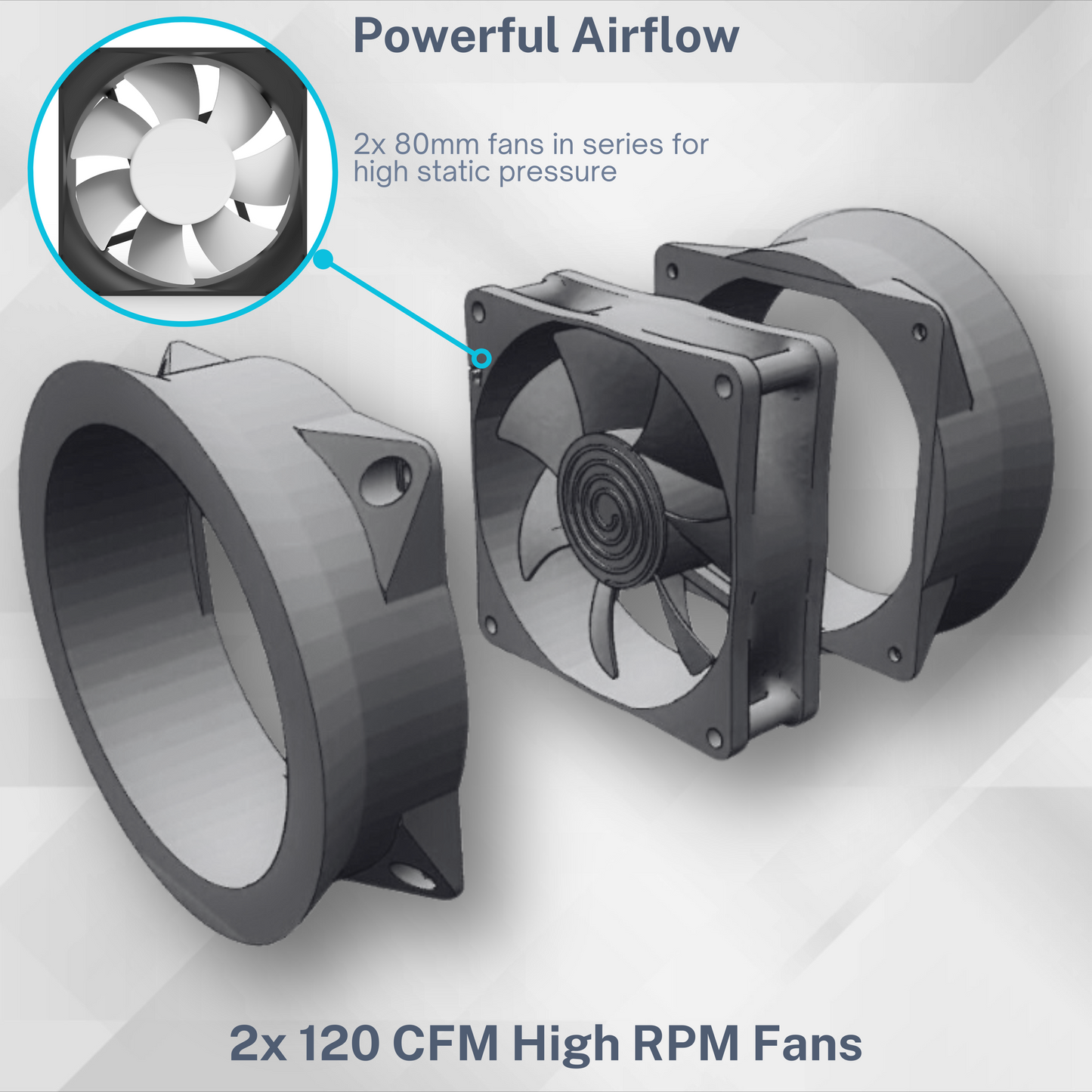
For ELEGOO printer users specifically, the VENT80 and VENT120 systems connect directly to the printer's exhaust port and duct fumes outside without requiring an enclosure.
If you want to read the primary sources, the 3D Venting research page compiles citations from NIOSH, ACS, WHO, INRS, and 12+ other sources in one place.